
Living With Liver Disease: Orientation, Comfort & Family Support
Liver disease can affect energy, cognition, nutrition and daily function in ways that change over time. The emphasis in supportive care should be on orientation, routine, communication and dignity.
A person living with liver disease may experience fluctuating energy levels, changes in concentration or memory, and the emotional weight of managing a progressive condition. But they remain a whole person with preferences, relationships and a life beyond their diagnosis.
COI Orb provides an adaptive workspace where the individual — and their care circle — can find the tools that support comfort, predictability and connection on their own terms.
What Can Change in Everyday Life
Cognitive changes and orientation
Liver disease can sometimes affect concentration, memory and mental clarity. A workspace that provides gentle orientation cues and a predictable structure can help the person navigate their day with more confidence.
Fatigue and fluctuating energy
Energy levels can change significantly from day to day. Technology that adapts — offering simpler interaction during low-energy periods and more engagement when the person feels well — respects this reality.
Nutritional management and routine
Dietary changes and meal planning require daily attention. Predictable routines and gentle reminders can support adherence without feeling restrictive or clinical.
Emotional wellbeing and family support
Living with a progressive condition affects emotional health and family dynamics. Communication tools and family connection features help maintain strong relationships during a challenging time.
What Can Help
Orientation and daily structure
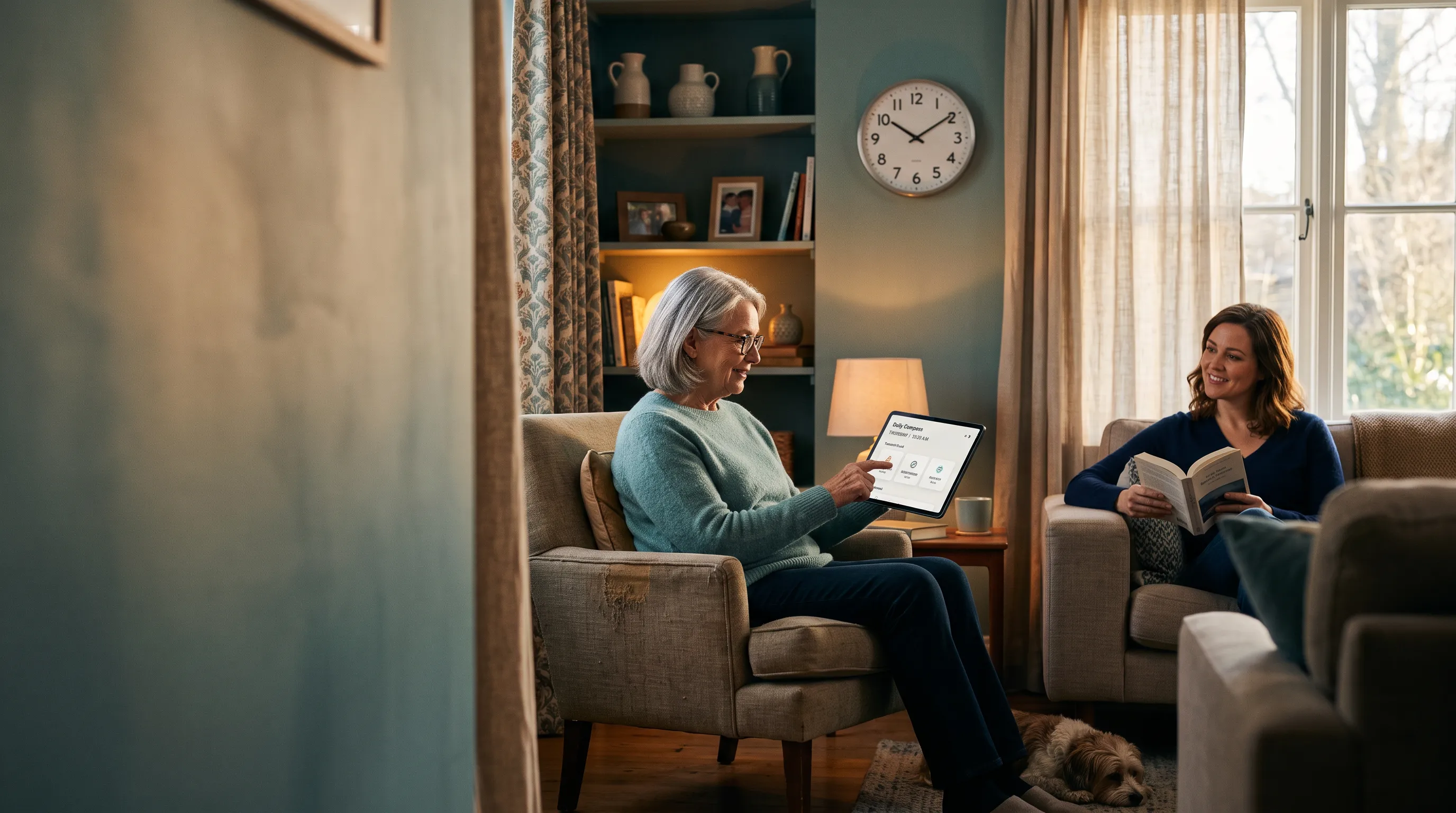
Daily Compass provides a consistent, gentle framework for the day. Sensory Lane offers familiar sensory grounding through music, photographs and memories. Together, they support orientation and a sense of place.
Calming environment
Harmony Engine creates personalized soundscapes for comfort. Combined with 3 a.m. Whisper Mode for nighttime calm, the environment can feel more supportive throughout the day.
Communication and expression
Story Scribe supports voice-based journaling and communication. When energy is low or concentration is difficult, speaking thoughts aloud can be easier than typing.
Family coordination
Silent Invite Canvas lets the care circle coordinate support quietly. Family can check in, share updates and arrange help according to the person's preferences.
The Person Comes First
You don't activate a “disease mode.” You choose what helps.
There is no single “right” digital workspace for everyone living with a serious illness. Two people with the same diagnosis can have completely different priorities. One person may want help staying connected with family. Another may want a quieter environment. Another may need larger controls. Another may want to preserve their stories.
COI Orb is designed around that difference.
Adaptive Tools That May Help
Daily Compass
Predictable daily structure and gentle orientation.
Sensory Lane
Familiar music, photographs and sensory grounding.
Harmony Engine
Personalized calming soundscapes for comfort.
Story Scribe
Voice-based journaling and communication.
Silent Invite Canvas
Caregiver and family coordination without pressure.
3 a.m. Whisper Mode
Low-stimulation nighttime environment.
Build Your Compassion Workspace
Choose what matters to you. Activate the tools you want. Your workspace adapts. Your caregiver sees only what you authorize. Your family stays connected according to your preferences.
Frequently Asked Questions
How can technology support someone living with liver disease?
+
Technology can help with daily routines, orientation, communication and family connection. The appropriate tools depend on the individual's specific needs and preferences.
Does COI Orb monitor liver function?
+
No. COI Orb provides comfort, communication and daily-support tools. It does not monitor, diagnose or treat liver disease. For medical care, always follow your hepatology team's guidance.
Trusted Resources
Canadian Liver Foundation
Education, support and resources for people living with liver disease and their families.
World Health Organization
Palliative-care framework and global guidance on quality of life for people with serious illness.
Canadian Hospice Palliative Care Association
National advocacy, education and resources for hospice and palliative care in Canada.
Related Conditions

Living With Kidney Disease: Comfort, Routine & Family Support
Explore person-centered approaches to daily routines, comfort, communication and family support for ...

Palliative Care: Comfort, Dignity, Family & Quality of Life
Learn what palliative care means, how it supports quality of life, and how individuals, caregivers a...
COI Orb provides adaptive comfort, communication and daily-support tools. It does not diagnose, treat or cure any medical condition. Always consult qualified healthcare professionals for medical advice, diagnosis and treatment.